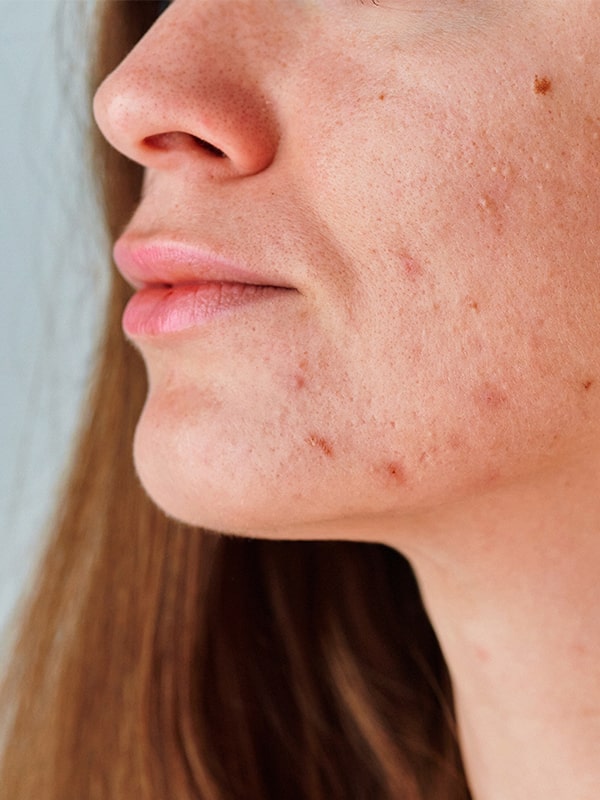
Acne scars
How to Eliminate Acne Scars and Restore Smooth Skin
Acne scars are one of the most persistent marks that acne can leave on the skin, often causing discomfort and frustration. Even after active acne has disappeared, scars may remain for years, having a significant psychological impact on those who suffer from them. There are several approaches available to reduce their appearance and, in many cases, eliminate them completely, improving the skin’s appearance and visibly reducing the marks.
Acne scars are permanent or semi-permanent marks that form on the skin following episodes of inflammatory acne. They consist of superficial or deep lesions in the areas where acne pustules were previously present. These scars result from collagen damage caused by inflammation. Acne, in fact, affects the deeper layers of the skin and, when the lesions heal, they may leave behind scar tissue.
Acne scars appear in different forms: they may be atrophic scars, such as “orange peel” scars (more superficial) or so-called “ice pick” scars (deeper and narrower), or hypertrophic scars, in which the scar tissue develops in excess compared to the normal skin level.
Acne is an inflammation of the sebaceous glands that causes clogged pores and the formation of pimples. It can appear during adolescence, in which case it mainly affects the forehead and nose, or during adulthood, when it tends to affect the lower part of the face, the neck, and the shoulders. In most cases, pimples disappear without leaving marks, but sometimes their healing process may leave visible signs.
The formation of acne scars is a complex process that can depend on several factors, including:
- Severity of acne: inflammatory acne and deeper lesions are more likely to leave scars.
- Genetic factors: genetic predisposition may also play an important role in the skin’s ability to heal from lesions.
- Manipulation of lesions: squeezing or touching pimples can increase the risk of scarring, as it further damages the tissue and prolongs inflammation.
- Lack of timely treatment: early intervention can limit the severity of acne and, consequently, reduce the risk of scarring.
There are various techniques available to reduce or eliminate acne scars, each with specific advantages and indications. The most suitable treatment is carefully selected and tailored to each patient based on a complete medical evaluation and several factors, such as the type and depth of the scars and the time elapsed since their formation. From fractional CO2 laser to microneedling, every treatment plan is designed and personalized to meet specific needs, ensuring visible and long-lasting results. Thanks to technological innovation in the field of aesthetic medicine, it is now possible to achieve visible improvements even for the most complex scars.
Acne scars should not become an obstacle to self-confidence. Thanks to the advanced aesthetic treatments available at the Dermacademy Institute, every patient can begin a safe and targeted journey to improve the appearance of their skin.
Treatments for Acne scars
How it works
The treatment uses the fractional CO2 laser, a technology that emits highly precise beams of light to treat only the areas affected by scars. This laser removes the most superficial layers of the skin, promoting cellular turnover and stimulating collagen production, the protein responsible for skin elasticity and firmness. During the procedure, the laser carefully vaporizes the targeted areas, reducing the depth of the scars and improving skin texture. This process also supports the continuation of the skin’s natural regeneration even after the treatment.
Goals
The laser treatment for acne scars is designed to achieve several goals, including visibly reducing scars by smoothing and evening out the skin texture. In addition, it stimulates collagen production, improving skin elasticity and tone. Another important benefit is the reduction of dyschromia associated with acne, such as dark or reddish spots, promoting skin that appears firmer, brighter, and healthier. This gradual approach ensures natural and progressive results while respecting the skin’s physiology and minimizing recovery time.
How it works
Microneedling uses microneedles to create microchannels in the epidermis, stimulating the skin’s natural regenerative process. This mechanism activates the production of collagen and elastin, improving skin texture and reducing imperfections such as scars and wrinkles.
Goals
The main goal of microneedling is to promote cellular renewal and encourage smoother, firmer, and more even skin. Thanks to its ability to stimulate the skin’s natural repair processes, it is an effective solution for scars, acne marks, and other skin irregularities.
How it works
Chemical peeling is a dermatological treatment that uses exfoliating solutions based on different types of acids to remove the superficial layers of the skin and stimulate cellular renewal. This treatment is ideal for improving skin texture, evening out the complexion, and giving the skin a firmer and more radiant appearance.
Goals
The treatment aims to reduce skin discoloration, smooth imperfections such as superficial scars and fine lines, and counteract damage caused by photoaging. It is particularly suitable for those who wish to restore visibly healthier and more even-looking skin.
How it works
Biostimulation works through microinjections of biocompatible substances (such as hyaluronic acid, vitamins, and amino acids) directly into the skin. These substances stimulate fibroblasts to produce new collagen and elastin, the essential proteins responsible for skin firmness and elasticity.
Goals
The main goal of biostimulation is to restore a younger, brighter, and firmer appearance to the skin. It combats signs of aging, such as wrinkles and loss of elasticity, by acting deeply to improve the skin’s structure. The result is visibly improved skin in a natural and progressive way.
Book a specialist consultation
The health and peace of mind of our patients are always our priority. We have developed a method that guarantees a personalized treatment journey through a process that begins with listening.
Book a specialist consultation at the Dermacademy Institute.


