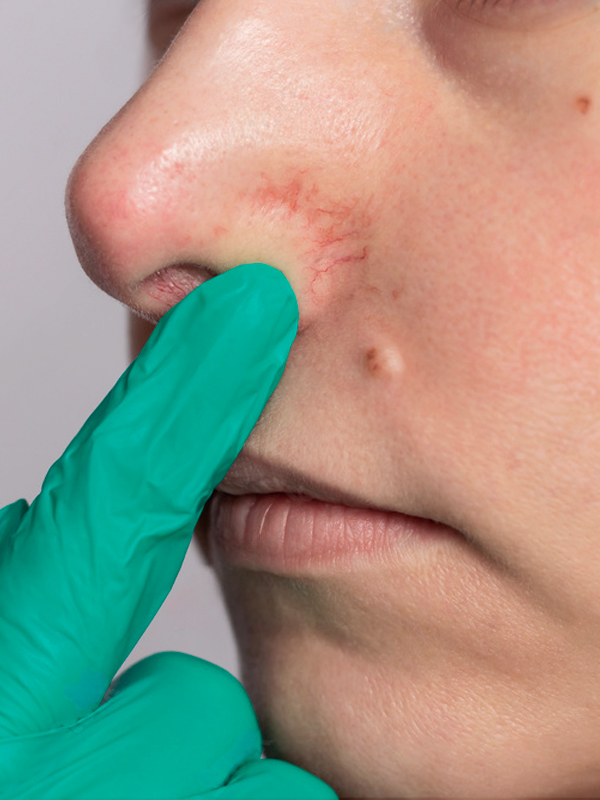
Facial Capillaries
Capillaries: As Important as They Are Delicate
Capillaries are essential for carrying oxygen and nutrients to tissues, but when they become broken or dilated, they can cause visible aesthetic concerns, such as thin red or bluish lines on the cheeks, nose, and chin, attracting more attention than desired.
Visible facial capillaries, known as telangiectasias, are the result of blood vessels that, instead of remaining discreet, become visible through the skin, compromising the natural uniformity of the complexion.
Although they do not represent a health risk, these small imperfections can interfere with the aesthetic harmony of the face. For those who wish to care for their appearance with gentle yet effective treatments, targeted and personalized solutions are available to reduce the visibility of these imperfections.
Capillaries are the terminal part of blood vessels and, under normal conditions, are invisible to the naked eye. They play a crucial role because it is at the capillary level that the exchange of oxygen and substances with cellular fluids takes place, ensuring the health of tissues.
Sometimes, however, due to their dilation, blood accumulates in the capillaries, making them particularly visible and creating a reddish network on the surface of the skin, a condition commonly known as telangiectasia. This phenomenon may occur due to several factors, including blood vessel fragility, microcirculation alterations, or aggressive external agents.
Among the most common manifestations involving abnormalities of facial capillaries are:
- Couperose: a condition characterized by the appearance of visible capillaries on the nose, cheeks, and chin, often accompanied by diffuse redness.
- Broken capillaries: small blood vessels that, once damaged, remain visible as thin red or bluish lines.
- Dilated capillaries: vessels that lose elasticity, becoming enlarged and visible on the skin surface.
The appearance of abnormalities related to facial capillaries can be attributed to multiple causes, often interconnected. Understanding them is the first step toward prevention.
- Capillary fragility: genetic predisposition plays an important role. Fragile facial capillaries are more likely to break or dilate, making some individuals more predisposed than others.
- Sun exposure and weather conditions: sun exposure and sudden temperature changes are among the main triggers of this condition. UV rays damage blood vessels, while transitions from hot to cold cause sudden dilation and contraction of the capillaries, increasing their fragility. The same applies to tanning lamps: heat and infrared rays excessively dilate the capillary vessels, causing them to lose elasticity and impairing proper blood circulation.
- Hormonal changes: hormonal fluctuations related to pregnancy, menopause, or the use of contraceptives may contribute to the appearance of dilated capillaries.
- Rosacea: rosacea is a chronic skin condition that causes persistent redness and the formation of visible facial capillaries.
- Alcohol consumption and poor diet: excessive alcohol intake and a diet rich in spicy foods or lacking nutrients can weaken skin capillaries. Alcohol causes vasodilation, while spicy foods stimulate inflammation and redness. A deficiency in vitamins and antioxidants reduces skin resistance, promoting capillary fragility and erythema.
- Physical and mechanical stress: excessive use of harsh skincare products or frequent rubbing can weaken the skin barrier, making capillaries more vulnerable.
Prevention of Visible Facial Capillaries
Although it is not always possible to completely prevent facial capillaries, certain precautions can reduce the risk of their appearance and help prevent worsening:
- Sun protection: apply a daily SPF sunscreen to protect the skin from UV damage.
- Avoid extreme temperatures: protect the face from sudden temperature changes by using barrier creams or protective coverings during winter and summer.
- Gentle skincare routine: use products formulated for sensitive skin, free from alcohol and harsh fragrances, to avoid irritation.
- Hydration and nutrition: keep the skin hydrated and follow a diet rich in antioxidants and vitamins, especially vitamin C, which helps strengthen blood vessels.
- Moderate alcohol and spice consumption: healthier dietary habits can improve microcirculation.
- Consult a dermatologist: monitoring the condition of the skin allows early intervention in cases of fragile or dilated capillaries.
Broken or dilated capillaries do not disappear spontaneously and tend to worsen over time if left untreated. In some cases, such as facial couperose, the aesthetic concern may be associated with a chronic skin condition that requires specific attention. A specialist evaluation makes it possible to identify the severity of the issue and plan a personalized approach to restore a more even complexion.
Visible facial capillaries should not be underestimated, both for their aesthetic impact and for their connection to overall skin health. At the Dermacademy Institute, patients can undergo personalized treatment protocols designed to meet their specific needs. Following a thorough specialist consultation, the most effective treatment plan will be developed to improve the appearance of the skin and reduce the visibility of small blood vessels.
How it works
The vascular laser is an advanced treatment that uses light energy to close dilated capillaries, reducing redness and improving the uniformity of the skin tone. This method is painless, quick, and effective, with visible results already after the first session.
Main causes
The main goal of laser photocoagulation is to treat telangiectasias, couperose, and facial erythema. The treatment aims to visibly reduce redness, eliminate dilated capillaries, and even out skin tone, thereby improving both aesthetic appearance and psychological well-being.
Book a specialist consultation
The health and peace of mind of our patients are always our priority. We have developed a method that guarantees a personalized treatment journey through a process that begins with listening.
Book a specialist consultation at the Dermacademy Institute.


