Unwanted hair
Unwanted Facial and Body Hair: Effective Removal Solutions
Unwanted hair on the face and body is one of the main aesthetic concerns, especially for women, but not exclusively. From fine facial hair to hair on the chin or back, excessive hair growth is a sensitive issue and often a source of discomfort that can negatively affect the self-esteem of those who experience it.
The good news is that there are many solutions available to reduce or eliminate unwanted hair, helping people feel more confident and comfortable with their bodies. Whether it is a personal choice or a matter of well-being, achieving smooth and soft skin is within everyone’s reach thanks to various techniques that provide long-lasting and personalized solutions for every need.
Body hair refers to the growth of fine and light hair that appears on different areas of the body such as the face, arms, abdomen, back, and chest. Under normal conditions, it is almost imperceptible, but in some cases it can become more noticeable. When there is abundant and dark hair growth, especially in unusual or unwanted areas such as the chin, chest, and back, it is referred to as unwanted hair or hirsutism.
Facial hair may be caused by hormonal changes (such as those related to menopause) or by underlying medical conditions. Fine and light hair often appears on the cheeks and forehead, while darker hair may develop on the chin and sideburn areas. For many women, this facial hair can become a source of discomfort, especially when it is visible or difficult to conceal.
The amount, thickness, and distribution of unwanted hair can vary from person to person and depend on several factors, including genetics, hormones, and ethnicity. Certain medical conditions, such as polycystic ovary syndrome or hirsutism, may lead to excessive hair growth.
The causes of unwanted hair growth can vary and include:
- Hormonal factors: hormonal imbalances are one of the main causes of excessive hair growth, as occurs in cases of polycystic ovary syndrome (PCOS), a condition that can lead to increased levels of androgen hormones, promoting hair growth in areas that are unusual for women. Menopause can also contribute to facial hair growth due to the reduction in estrogen levels.
- Genetic predisposition: some individuals are genetically predisposed to having a greater amount of facial and body hair. This factor is often noticeable in women of certain ethnicities or in families where abundant hair growth is common.
- Lifestyle and stress: high levels of stress can affect hormones, which in turn may stimulate increased hair growth in various areas of the body, including the face, back, and arms.
- Medication use: certain medications may promote hirsutism as a side effect. These include corticosteroids and some types of drugs used to treat endocrine disorders.
Removing unwanted hair is not only an aesthetic matter, but also one of personal well-being and comfort. The Dermacademy Institute offers various treatments to address unwanted hair using modern and minimally invasive techniques.
Before starting any treatment, our approach includes a specialist consultation to assess the characteristics of the hair, the skin phototype, and any possible contraindications. This step is essential for defining the most appropriate treatment plan and achieving the best results. In a welcoming and professional environment, our team of experts is available to provide personalized and innovative solutions, with the goal of improving both the health and beauty of the skin.
Treatments for Unwanted hair
How it works
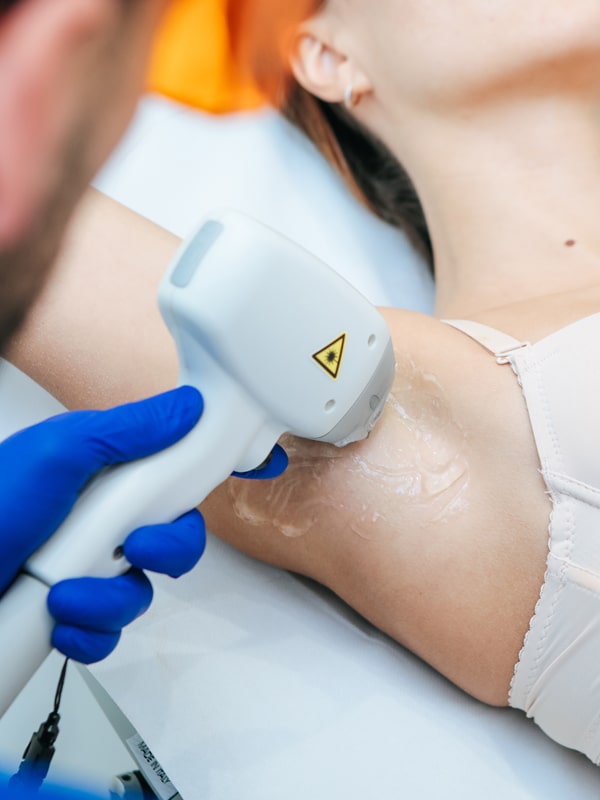
Diode laser hair removal is a progressive technique that uses laser light to target the melanin in the hair, converting light energy into heat and selectively damaging the hair follicle (selective photothermolysis) without affecting the surrounding tissues. At the Dermacademy Institute, the diode laser is used, one of the most effective and safest devices for achieving long-lasting reduction of hair regrowth.
Goals
The goals of diode laser hair removal are multiple: to eliminate unwanted hair by significantly reducing it and, in many cases, achieving permanent results in the treated areas. In addition, this treatment helps improve the appearance of the skin, making it smoother and healthier by reducing issues such as shaving scars, ingrown hairs, and folliculitis.
How it works
The Alexandrite laser uses a specific wavelength (755 nm) that directly targets the melanin present in the hair. Melanin is the pigment responsible for hair color, and its concentration varies depending on the skin phototype and the hair growth phase. The light energy is absorbed by the melanin and converted into heat, destroying the hair follicle without affecting the surrounding tissues.
Goals
Alexandrite laser hair removal aims to progressively and long-lastingly reduce unwanted hair regrowth. Treatment sessions lead to smooth, hair-free skin, with significant reduction visible from the very first sessions. Unlike other methods, such as diode laser treatment, the Alexandrite laser is particularly suitable for dark and fine hair, proving highly effective even on lighter skin phototypes. In addition, thanks to technological advancements, it can also be used on slightly tanned skin with optimal results.
Book a specialist consultation
The health and peace of mind of our patients are always our priority. We have developed a method that guarantees a personalized treatment journey through a process that begins with listening.
Book a specialist consultation at the Dermacademy Institute.


