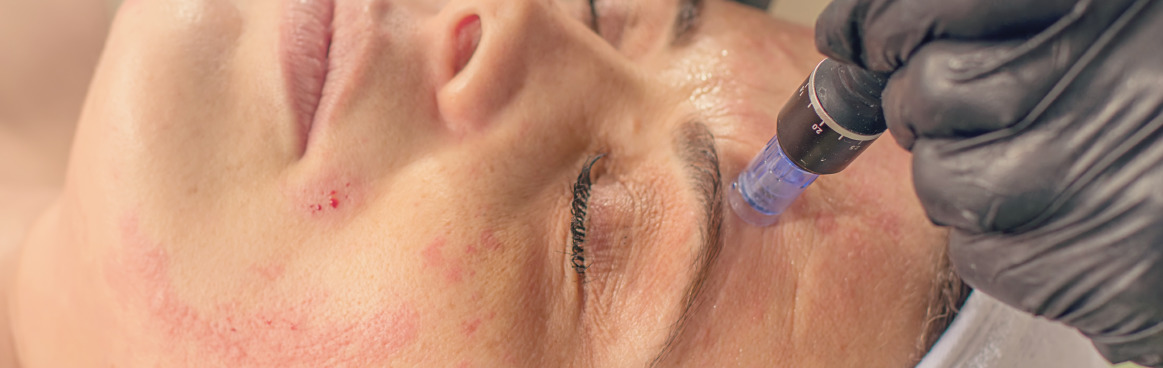

Microneedling: Effective in Scar Reduction
In recent years, microneedling has increasingly been used to treat a variety of dermatological conditions, including traumatic scars, acne scars, and surgical scars. Microneedling has been shown to promote neocollagenesis, meaning the production of collagen within skin cells, through the mechanical disruption of the epidermis and dermis. This process helps restore elasticity to the skin.
How Microneedling Works
The penetration of microneedling needles into the epidermis creates multiple microchannels that physically disrupt the dense bundles of fibrous tissue responsible for scars, while also stimulating new synthesis and the deposition of collagen and elastin within the fibrotic dermis. The most advanced devices, such as those used at the Dermacademy Institute, are micro-motorized and offer greater precision and effectiveness in scar treatment. At our Institute, microneedling is also combined with the application of creams containing skin growth factors, which accelerate results and reduce the number of sessions needed to achieve the desired effect. Over the years, our physicians have demonstrated the effectiveness of these creams in microneedling treatments, presenting their findings at conferences such as the Italian Society of Aesthetic Medicine Congress in 2019.
Studies on Microneedling
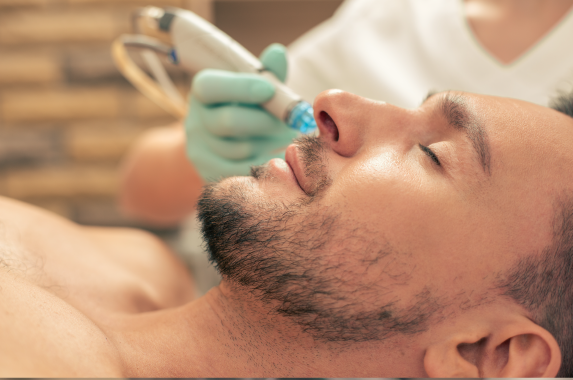
In an important study on microneedling published in February 2020 in the prestigious journal Plastic and Reconstructive Surgery (the official journal of the American Society of Plastic Surgeons), 120 patients with different types of scars (acne-related, traumatic, or surgical) underwent monthly microneedling sessions. Patients received between 1 and 6 sessions over the course of one year and achieved a scar reduction ranging from 50% to 100%. This study demonstrates the effectiveness of microneedling in treating scars caused by trauma, acne, or surgery.
Side Effects of Microneedling
The only side effect reported in patients undergoing microneedling was mild erythema after the session, which in the worst cases lasted up to 24 hours, but typically did not persist beyond 2 hours following treatment.
Who Can Undergo Microneedling?
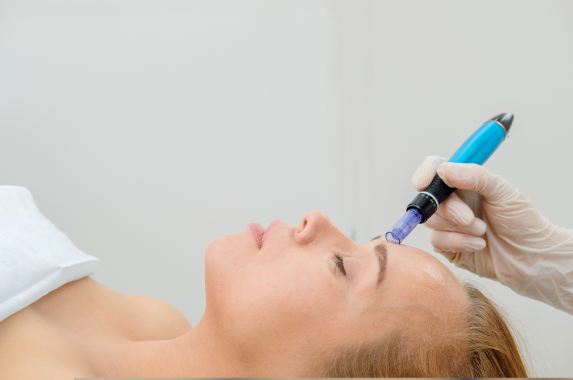
Microneedling treatment is suitable for most patients, with the exception of those affected by skin diseases, active acne, blood clotting disorders, diabetes, or similar conditions. In any case, patients who book a consultation at our Institute will first undergo a medical evaluation to understand their condition and ensure that microneedling is the most appropriate therapeutic option for their case (we also use other methods to treat these issues, such as fractional CO2 laser, chemical peels, and more). Following the consultation, the physician will explain the treatment plan in detail, carefully guiding the patient through every phase of the process. Although some patients may still be unfamiliar with microneedling, at the Dermacademy Institute in Pisa it is performed with the utmost professionalism.
Conclusion
Microneedling is a safe and proven procedure supported by thousands of positive results. It is not only useful for scar reduction, but also restores skin elasticity by stimulating collagen production. Microneedling is an outpatient treatment that can be performed without anesthesia.
Author: Istituto Dermacademy

