

Botulinum Toxin Treatment: What You Need to Know
Botulinum toxin appeared relatively late in medicine, and its introduction into aesthetic medicine is even more recent. Since then, however, it has revolutionized the field, becoming one of the most widely used substances in a variety of treatments. Let us take a closer look at this substance and its possible applications.
What Is Botulinum Toxin Used For?
Botulinum toxin is a neurotoxin produced by a bacterium and divided into two main types: type A, most commonly used in aesthetic medicine, and type B, mainly employed in general medicine. Botulinum toxin acts at the nervous system level by inhibiting the release of a neurotransmitter called acetylcholine. Originally, it was used in medicine to treat muscle spasms and tics. Since 1987, it has also been used in aesthetic medicine for the treatment of dynamic wrinkles, meaning wrinkles caused by repetitive movements concentrated in a specific area. By law, botulinum toxin may only be administered by qualified medical professionals in appropriate medical facilities, and it cannot be used on patients over 65 years of age.
The History and Discovery of Botulinum Toxin
Discovered in the 1970s, botulinum toxin was first used in humans during the early 1980s to correct strabismus and received approval from the Food and Drug Administration (the official American authority for drug regulation) for this and other purposes in 1989.
One of the medical applications most appreciated by physicians is the treatment of muscle spasticity in both adults and children, approved by regulatory authorities in 1991. The treatment of cervical dystonia, however, had to wait until 2000 before botulinum toxin could be included among its therapies.
Finally, in 2002, approval was granted for the use of botulinum toxin in aesthetic medicine: initially, the treatment was limited to the temporary improvement of expression wrinkles in the glabellar area (the region between the eyebrows).
Today, many other fields are still awaiting evaluation and approval for the use of botulinum toxin, including certain forms of migraine, urinary incontinence, and prostate-related symptoms.
The Properties of Botulinum Toxin
We often speak generally about “botulinum toxin”, but in reality there are seven different types, identified by the first seven letters of the alphabet, from A to G. Type A alone includes three known subtypes, bringing the total number of possible botulinum toxins to ten.
In all its subtypes, botulinum toxin is a small protein composed of two subunits: one “heavy” and one “light”. The “heavy” polypeptide chain weighs 100 kDa and is linked through disulfide bonds to the “light” chain, which weighs 50 kDa. The action of botulinum toxin is due to the light chain, which attaches to the neuromuscular junction and blocks the release of acetylcholine from vesicles. It is precisely this inhibition of acetylcholine release that interferes with nerve impulses and ultimately causes muscle relaxation — the final effect of the toxin both in botulism and in medical and aesthetic applications.
Botulinum toxin is “thermolabile”, meaning it is easily degraded by heat: for this reason, foods that may contain it are initially preserved through cooking processes.
Differences Between Botulinum Toxin and Fillers
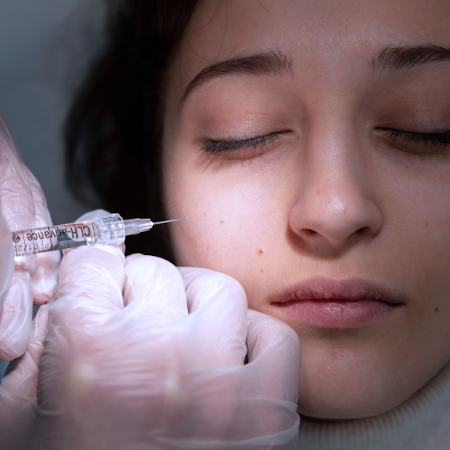
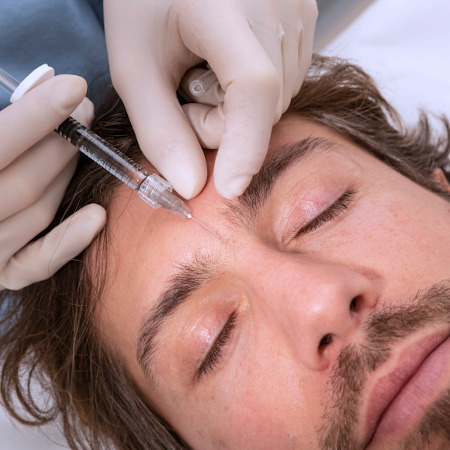
Botulinum toxin, commonly referred to as “Botox”, has long been considered one of the most effective solutions for wrinkles. Compared to fillers, botulinum toxin is much more suitable for correcting dynamic wrinkles, which involve muscular activity, whereas fillers are more appropriate for static imperfections. Thanks to its easy administration, botulinum toxin treatments have now largely replaced forehead lifting procedures, which are far more invasive surgical operations performed under anesthesia.
Botulinum Toxin Administration
Botulinum toxin treatments at the Dermacademy Institute are performed exclusively by experienced physicians specialized in aesthetic medicine. The treatment consists of small, painless local injections whose effects begin to appear approximately two days after application and reach their maximum effect after 14 days. At that point, a follow-up check-up is recommended, and at our Institute this is included in the treatment cost. The overall effect of botulinum toxin lasts approximately 6 months, depending on the patient’s skin characteristics and lifestyle. Treatments may be repeated periodically. If the treatment is discontinued, the treated area gradually returns to its pre-treatment condition. As always at the Dermacademy Institute, botulinum toxin treatment is preceded by a careful medical history review, examination, and informed consent process.
Side Effects of Botulinum Toxin Treatment
Botulinum toxin therapy generally has no side effects. The most common, although still rare, is bruising at the injection site, sometimes associated with mild headache or a sensation of skin tightness. Overall, however, botulinum toxin treatment is considered minimally invasive and far less aggressive than surgery.
Who Can Undergo Botulinum Toxin Treatment?
Botulinum toxin treatment is well tolerated by virtually all of our patients, and most individuals can safely undergo the procedure. Today, we are also seeing an increasing use of botulinum toxin for the prevention of forehead expression lines in individuals with hypermobility in this area — meaning people with excessive forehead expressiveness who are likely to develop horizontal wrinkles earlier than others.
Contraindications of Botulinum Toxin
Botulinum toxin is a medication that can potentially be harmful if not used correctly. However, contraindications to its proper use are actually quite limited. As with any aesthetic medicine treatment, botulinum toxin should not be administered during pregnancy or breastfeeding. If the patient is aware of an allergy to botulinum toxin or any excipient contained in the product, the treatment obviously cannot be performed, and this information must be communicated to the physician.
Patients affected by myasthenia gravis or Eaton-Lambert syndrome are also not eligible for botulinum toxin treatment. The procedure is likewise not recommended in the presence of infections or inflammation in the area where the injection is to be performed.
Finally, botulinum toxin treatment should be avoided if the patient is undergoing antibiotic therapy, especially with aminoglycosides, or taking muscle relaxants, which already reduce muscle contractility by nature. Individuals with chronic alcohol abuse should also avoid botulinum toxin treatment due to a higher likelihood of adverse effects.
Are There Alternatives to Botulinum Toxin Treatment?
Today, although some treatments are promoted as “alternatives to botulinum toxin”, it is important to be clear: there are no truly valid and effective alternatives to this treatment.
Conclusion
Botulinum toxin treatment for reducing forehead wrinkles is a simple and effective procedure without significant complications. Its effects are completely reversible, and it remains the leading treatment in aesthetic medicine thanks to its effectiveness and tolerability.
Looking back over the past twenty years, we have seen hundreds of aesthetic treatments emerge and disappear over time: the only one that has consistently remained is botulinum toxin treatment, which should therefore be considered one of the safest and most effective procedures in aesthetic medicine.


