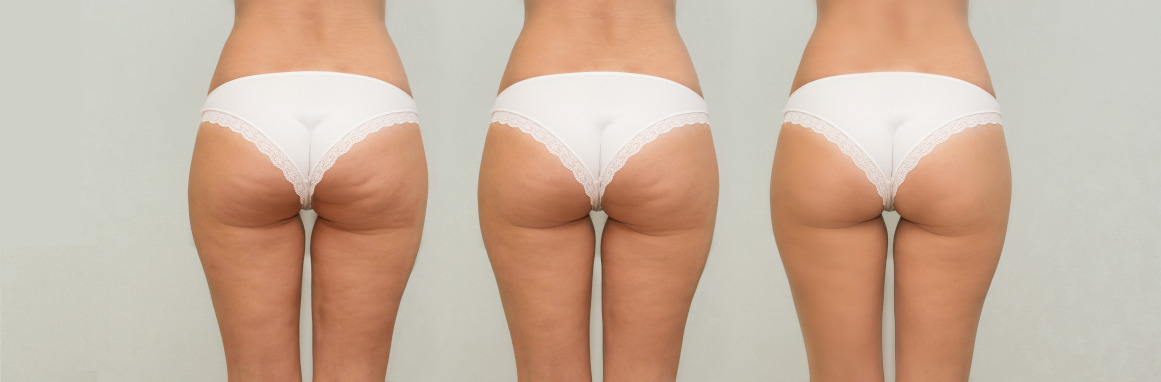

How to Eliminate Cellulite: The Most Effective Methods
How can cellulite be eliminated? There are many possible answers to this question, and each corresponds to a specific treatment that may be more or less suitable depending on the individual situation. Advances in research and technology now make it possible to eliminate or reduce cellulite through different techniques, all effective but characterized by different approaches.
At the Dermacademy Institute, we use three treatments to counteract this condition: NIR (Near To Infrared), mesotherapy, and carboxytherapy. Each of these therapies, which acts locally, is always combined with a treatment plan aimed at restoring the body’s overall balance, involving nutrition and the patient’s overall lifestyle.
In any case, before selecting the most appropriate treatment, our specialists carry out a comprehensive evaluation during the initial consultation.
What Cellulite Is and How to Fight It
Cellulite is an inflammatory microcirculatory condition associated with abnormalities in the development of subcutaneous tissue. The areas most commonly affected are the hips, thighs, buttocks, and abdomen, where the classic “orange peel” skin appearance develops, with varying severity depending on the stage of the condition.
The severity of cellulite is classified into three stages, according to its clinical and aesthetic impact:
- Edematous cellulite: characterized by fluid stagnation in the typical areas where cellulite accumulates.
- Fibrous cellulite: defined by the appearance of the characteristic “orange peel” texture.
- Sclerotic cellulite: in the third and final stage, the tissue becomes hardened, the skin profile irregular, and small nodules may become painful to the touch.
Methods for Reducing Cellulite
The causes of cellulite are linked to numerous factors that contribute to alterations in adipose tissue and promote the development of edema and inflammation. These include genetic and hormonal factors, lymphatic circulation issues, and vascular alterations. A sedentary lifestyle and poor nutrition also play a role in the appearance of this condition.
However, modifying lifestyle habits and adopting a healthier diet are often not enough to defeat cellulite. For this reason, over the years, medical and aesthetic treatments based on different techniques have been introduced. As previously mentioned, to maximize their effectiveness, each treatment must always be accompanied by a broader therapeutic approach aimed at restoring the body’s overall balance.
Fighting Cellulite with Carboxytherapy
Carboxytherapy is a treatment that involves the injection of gaseous carbon dioxide into the dermis or subcutaneous tissue. In aesthetic medicine, it is used to treat various imperfections and is particularly indicated for cellulite reduction. It is certainly not a new technique: it was first used in France in the 1930s to treat vascular disorders.
Over the years, the techniques have evolved, and today carboxytherapy is especially appreciated for the effectiveness of its results and for the use of a natural, non-toxic, and hypoallergenic substance.
The treatment consists of administering medical carbon dioxide into the subcutaneous tissue (or intradermally) through localized microinjections performed with very fine needles. The action of carbon dioxide works on the microcirculation — reopening closed capillaries, reactivating poorly functioning ones, and increasing oxygen levels in the tissues — on adipose tissue, by breaking down fat cell membranes, and on the skin itself, by reducing localized fat deposits and promoting an overall rejuvenating effect on the dermis.
Carboxytherapy is an effective method for reducing cellulite and is generally very well tolerated. It does not cause allergies and has no significant contraindications. The treatment is not painful, and the only possible inconvenience is the appearance of small bruises in the injection area, which disappear within a few days.
Each carboxytherapy session may last from 10 to 30 minutes, and the number of sessions required varies according to the patient’s specific condition.
NIR – Near To Infrared
In recent years, a new method for reducing cellulite has become increasingly popular in aesthetic medicine: NIR, which stands for Near To Infrared. By using a high-power light source, the subdermal layer is heated, helping to destroy localized fat deposits, improve skin elasticity, and stimulate collagen production.
The NIR treatment exposes the affected area to a lamp that emits light similar to infrared laser light, with a power output reaching 1300 nm. This allows heat to penetrate deeply into the tissues, causing contraction of existing fibers and the formation of new collagen.
Among the main advantages of NIR for cellulite reduction is the fact that it is painless, non-invasive, and free from side effects. Suitable for all skin types, it provides visible results after only a few sessions. The effectiveness of this technique increases significantly when combined with other treatments such as carboxytherapy or mesotherapy.
The number and duration of sessions vary depending on the patient’s condition.
Reducing Cellulite with Mesotherapy
In aesthetic medicine, mesotherapy is a technique based on the subcutaneous injection of specific substances aimed at treating imperfections caused by cellulite. To reduce cellulite, medications and active compounds are used to improve blood and lymphatic circulation, helping restore softness and firmness to the skin.
The name of this technique derives from the mesoderm, the middle layer of the skin reached by the injected substances through extremely fine needles. The substances used are mainly lipolytic agents, capable of dissolving fat deposits, whether pharmaceutical compounds or phytotherapeutic ingredients such as phosphatidylcholine, carnitine, or deoxycholic acid. Specifically, these substances directly target fat cells, causing their contents to be released and naturally eliminated by the body, while phytotherapeutic compounds stimulate the elimination of toxins and excess fluids, promoting blood and lymphatic circulation.
The Initial Consultation for Cellulite Evaluation
During the first consultation for a treatment aimed at eliminating or reducing cellulite, the specialist at the Dermacademy Institute in Pisa carries out a detailed medical history, gathering information about the patient’s overall health, any past or current conditions, ongoing pharmaceutical or hormonal therapies, and the possible onset of menopause. During this phase, the physician also investigates the presence of bacterial flora imbalances (dysbiosis), intestinal issues, or vitamin deficiencies highlighted by blood tests.
During the evaluation, the specialist determines whether the condition is actually cellulite, as localized fat deposits or microcirculatory disorders are often mistaken for cellulite and require completely different treatments. At the same time, the physician seeks to understand whether the imperfection is related to genetic factors or to an unbalanced lifestyle.
The consultation also includes a “psychological” assessment, aimed at understanding the patient’s motivations for seeking treatment and their willingness to undertake a comprehensive lifestyle improvement pathway.
This aspect is extremely important for the effectiveness of cellulite treatments, which — unlike many other aesthetic medicine procedures — do not have a fixed or limited duration over time. In order to work effectively, cellulite reduction methods must always be accompanied by a broader process of improving the patient’s habits and lifestyle.
During follow-up visits, the achieved improvements are documented using dedicated three-dimensional photography systems, designed to accurately evaluate the initial condition and the post-treatment progress.
Would you like to receive a cellulite evaluation and discover which treatment among those mentioned in this article is most suitable for you? Fill out the contact form and send your request.
Author: Istituto Dermacademy

